
What is an account transfer?
An account transfer (cari virman) is the movement of a balance from one customer/supplier account to another without any money changing hands. In its most common form, you assign the receivable you hold from your customer to your supplier in settlement of what you owe the supplier, and the customer now pays that amount directly to the supplier. Nothing moves in the cash box or the bank; only the account the balance sits on changes.
This page covers how a three-party transfer works with an example, a copyable transfer letter, the two lines of the transfer voucher, and how it differs from set-off. If the debit-and-credit logic of an account is new to you, start with the what is a cari account page.
Example: a three-party account transfer
Yılmaz Ticaret owes you 12.000 ₺. You, in turn, owe your supplier Kaya Ambalaj 20.000 ₺. Yılmaz Ticaret also wants to buy goods from Kaya Ambalaj. The three parties agree: Yılmaz Ticaret’s 12.000 ₺ debt to you is transferred to Kaya Ambalaj in settlement of your debt to Kaya Ambalaj.
| In your records | Before the transfer | Transfer entry | After the transfer |
|---|---|---|---|
| Yılmaz Ticaret (customer) | owes 12.000 ₺ | 12.000 ₺ credit | 0 ₺ |
| Kaya Ambalaj (supplier) | 20.000 ₺ payable to them | 12.000 ₺ debit | 8.000 ₺ payable to them |
No money left your cash box and no money came in from the customer, yet both your receivable and your payable dropped by 12.000 ₺. On the same day, Kaya Ambalaj records a 12.000 ₺ receivable from Yılmaz Ticaret in its books, and Yılmaz Ticaret moves its debt from you to Kaya Ambalaj. The only test that the transfer was recorded correctly is that all three statements match each other the next day.
Account transfer letter example
The party making the transfer prepares the letter, sends it to the other two parties and gets it back signed. Replace the parts in square brackets with your own details:
Writing out all three balances after the transfer is what separates a “request letter” from a “transfer letter”: the other party sees not only the request but also what to enter in their own books. Prepare it in Word and send it as a PDF; don’t post the entry until the signed confirmation comes back.
Transfer voucher: two lines, same amount
Once the confirmation arrives, you post the entry as one voucher with two lines. There is no cash or bank line — if there is one, the entry is no longer a transfer but a collection and a payment:
| Account | Debit | Credit | Description |
|---|---|---|---|
| Kaya Ambalaj (supplier) | 12.000 ₺ | Transfer letter dated 24.09.2026 | |
| Yılmaz Ticaret (customer) | 12.000 ₺ | Transfer letter dated 24.09.2026 |
Under Turkey’s Uniform Chart of Accounts, this means a debit to account 320 Trade Payables and a credit to account 120 Trade Receivables; for the voucher type and document layout, follow the software your accountant uses. Writing the same date in the description of both lines matters: six months later, the person who sees the “12.000 ₺ credit” line on the statement will understand from it where the money went.
Account transfer, set-off and bank transfer
| Operation | How many parties? | Does money move? | What changes? |
|---|---|---|---|
| Account transfer | At least two separate companies | No | The balance moves from one account to another |
| Set-off | One company, two-way account | No | The same company’s payable and receivable are netted against each other |
| Bank transfer | Same account holder | Yes | Money moves from one bank account to another |
When the same company has been kept on two separate account cards by mistake, the balance is also moved from one to the other with a transfer; this is one of the most common causes of differences in reconciliation and is explained with an example table on the how to do account reconciliation page.
How do you record a transfer in the program?
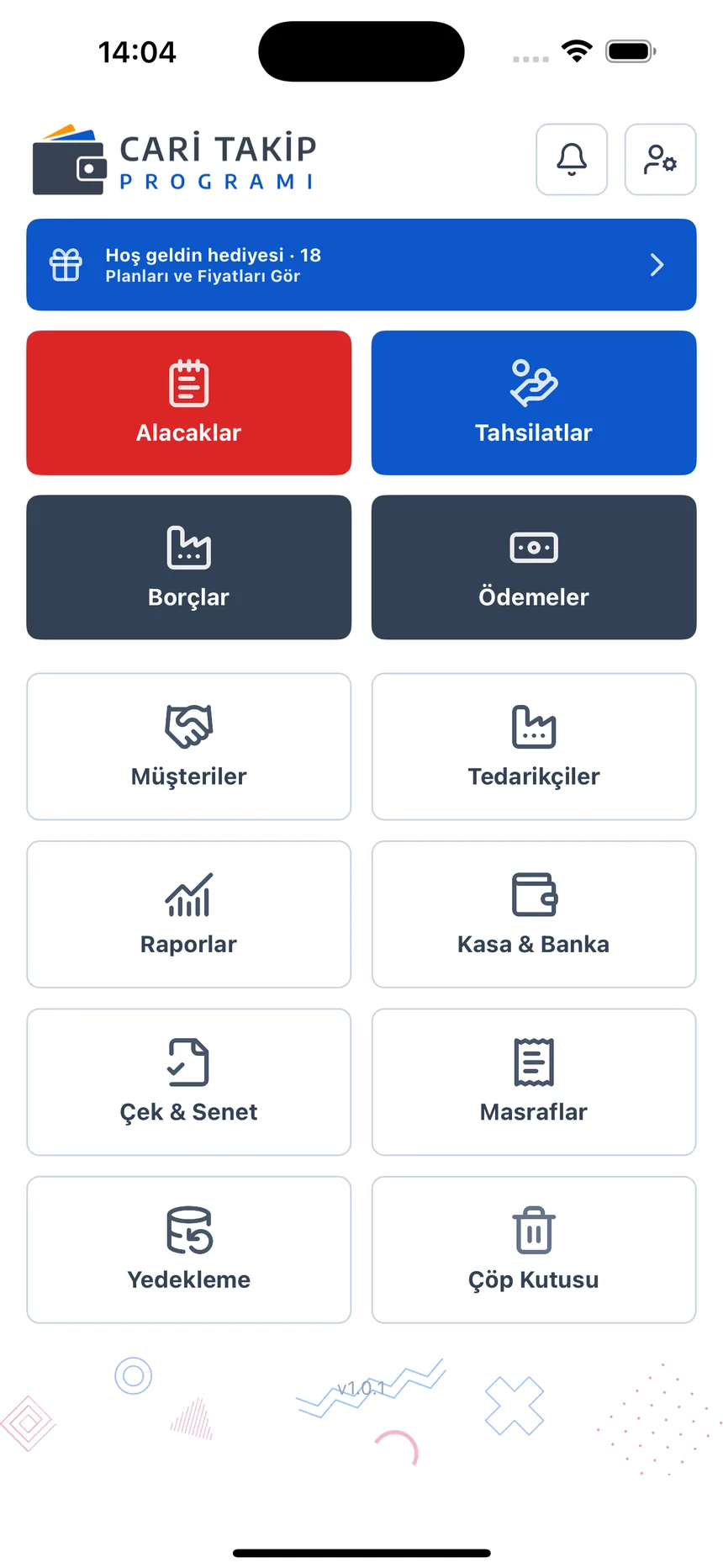
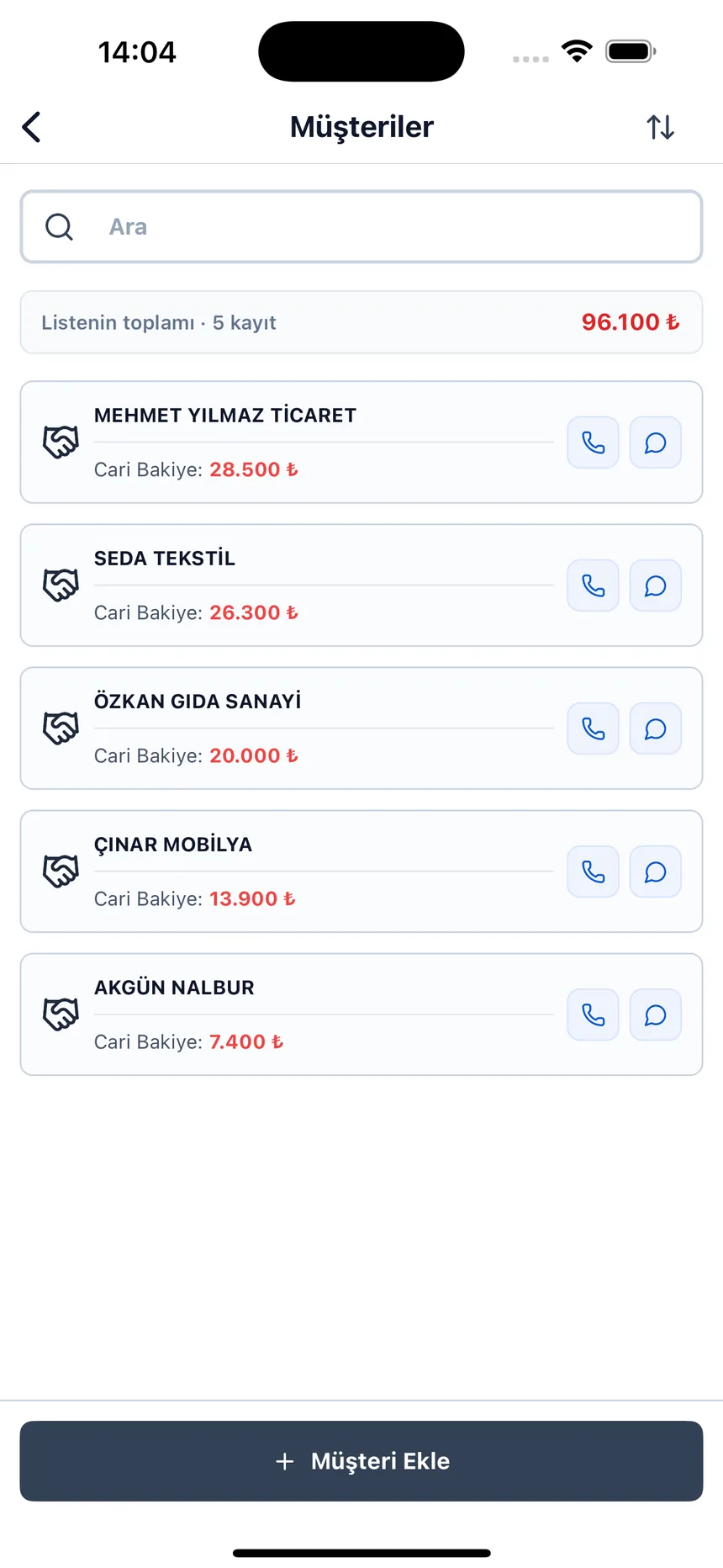
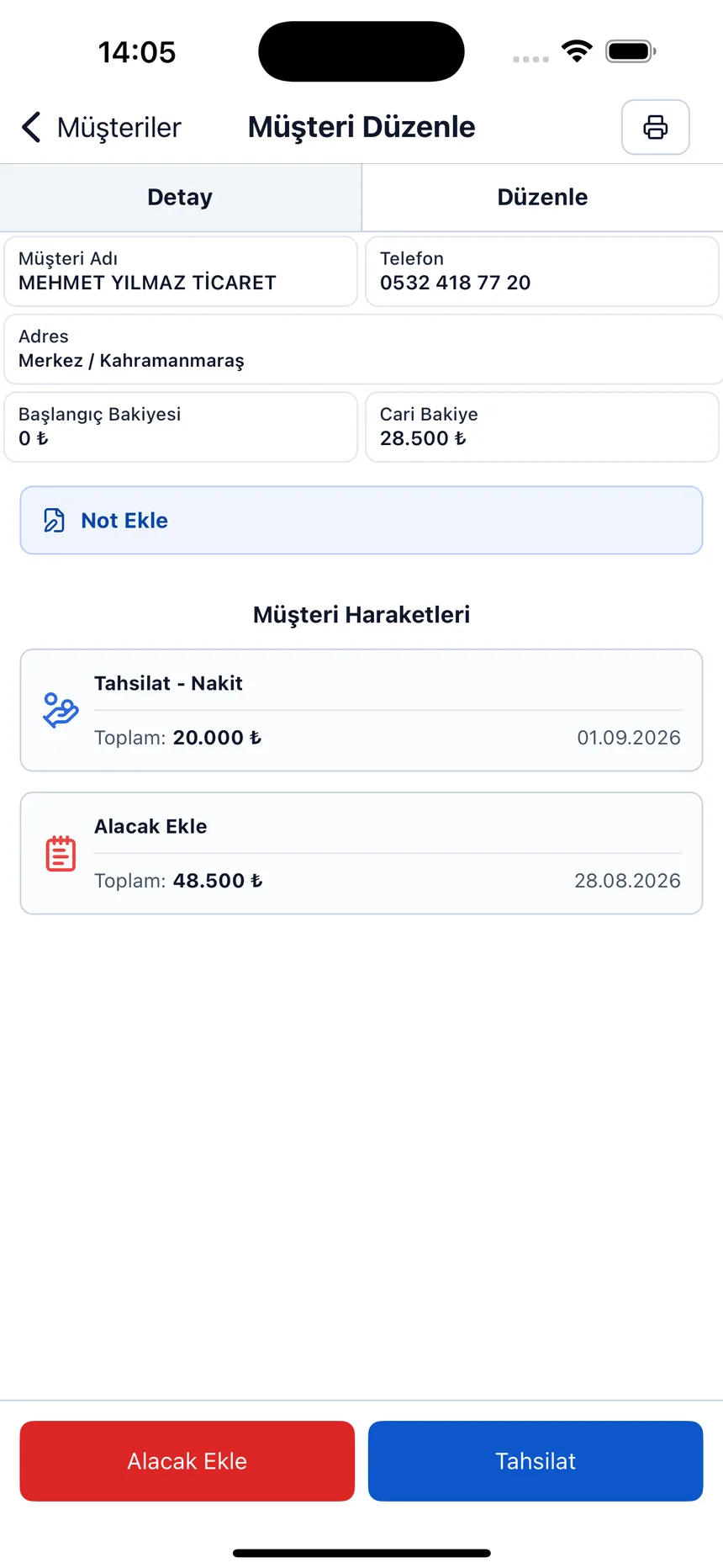
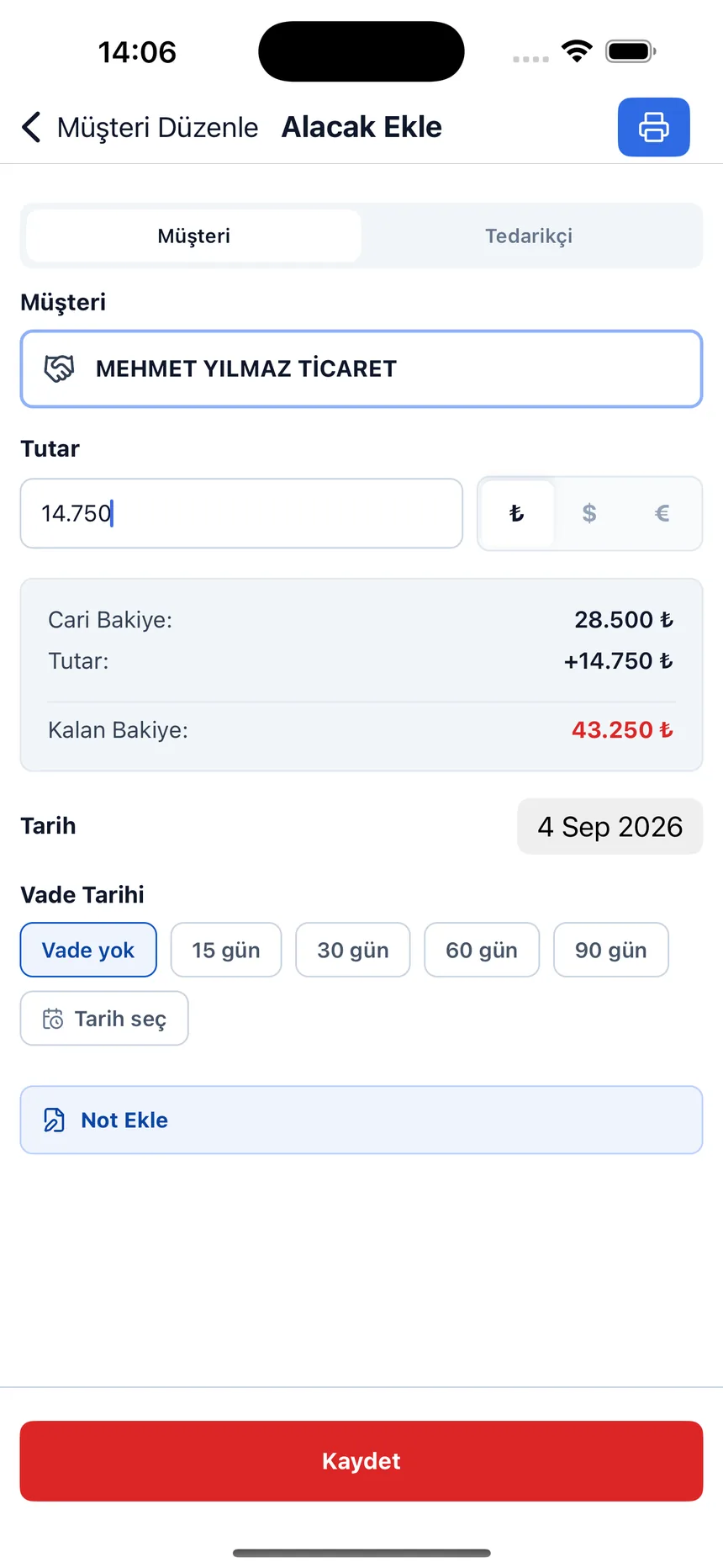
In Account Ledger: Debt & Credit there is no separate transfer voucher between accounts; the Transfer button in the panel is for moving money between your cash and bank accounts. You record an account transfer as one entry on each of the two accounts’ cards, with the date of the transfer letter in the description: a collection on the card of the account being transferred and a payment on the card of the supplier taking over. Both customers and suppliers can be selected in the collection and payment forms. After posting, the account statement of each account shows the new balances; for the confirmation letter to send to the three parties, you can use the layout in the account reconciliation letter example as is.
Frequently asked questions
What is an account transfer?
It is the movement of a balance from one customer/supplier account to another without any money changing hands. The most common form is the three-party one: you assign the receivable you hold from your customer to your supplier in settlement of what you owe the supplier. In your records the customer’s debt is closed and your debt to the supplier falls by the same amount; the customer now pays that amount directly to the supplier.
How do you write an account transfer letter?
It states the date, the full legal names of the three parties, the amount transferred (in figures and in words), which receivable the amount arises from and which debt it is applied against, the balances remaining after the transfer, and the stamp and signature of the parties. The letter is prepared by the business making the transfer, sent to the other two parties, and the entry is not posted until the signed confirmation is returned.
What is an account transfer receipt or voucher?
It is the internal document showing the accounting entry of the transfer. A single voucher has two lines: a credit to the account being transferred and a debit to the account taking over — both for the same amount, with no cash or bank line. The date of the transfer letter goes in the voucher description; anyone who sees the entry on the statement finds its supporting document from there.
What is the difference between an account transfer and set-off?
Set-off is netting mutual payables and receivables against each other with the same company: the two balances of a company that is both your customer and your supplier are settled against each other. A transfer, on the other hand, moves a balance from one account to another; at least two different companies are involved. In practice, because a transfer is also recorded with a set-off voucher, the two words are often used interchangeably.
Is the other party’s confirmation required for an account transfer?
In practice, yes: the company whose debt is being transferred must know who it now pays, and the company taking over will add a new receivable to its own books. A transfer posted without confirmation means the statements of the three parties won’t match each other. For the legal standing of written confirmation and the document layout, consult your accountant.
Is a bank transfer the same as an account transfer?
No. A bank transfer is one person moving money between their own two bank accounts; there is a real movement of money. In an account transfer, no money moves; only the account the balance sits on changes.
Last updated: 2026-09-24
See both balances on the same screen after the transfer
Each account’s transactions in date order with a running balance.
Keep who owes whom, and how much, in one place
Open a free account; customer and supplier balances, including after a transfer, are ready alongside the statement.